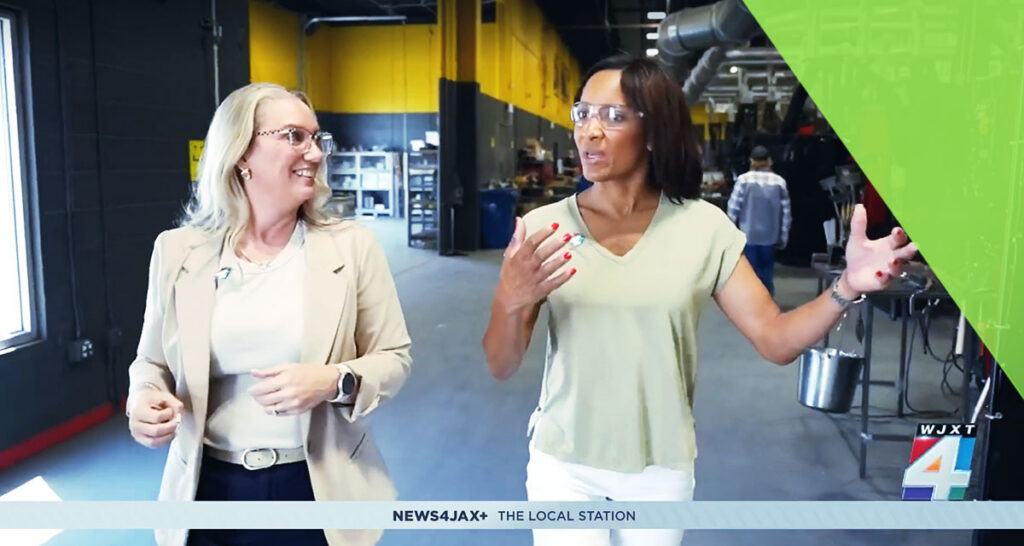
Why skilled trades in Jacksonville matter is becoming clearer as employers look for people who can maintain vehicles, repair essential systems, move goods, support technology, and keep businesses operating. News4JAX recently visited J-Tech to examine the local skills gap and see how students are preparing for technical careers through hands-on training. Read the full News4 JAX feature here and read more J-Tech news here.
The visit was part of Trade Up, a Northeast Florida initiative focused on skilled trade careers and workforce needs. The story gave viewers a look inside J-Tech’s Jacksonville campus, where students train in shops, labs, and technical learning environments. You can also watch the News4JAX video.
The conversation is bigger than one story or one school. Skilled trades affect how people travel, work, live, and do business every day.
Why Skilled Trades in Jacksonville Matter to the Local Economy
Jacksonville depends on skilled workers across transportation, logistics, automotive service, heating and cooling, manufacturing, marine services, information technology, and other industries.
Cars and commercial trucks need maintenance on I-95 and I-10. Homes and businesses need working HVAC and refrigeration systems across North Florida. Heavy equipment must be repaired. Our local businesses’ networks need protection from cyberattacks. Boats and recreational vehicles require technicians who understand mechanical and electrical systems with Jacksonville’s large water presence.
When employers cannot find enough qualified workers, existing teams may carry larger workloads. That means repairs may take longer and businesses may also have difficulty filling essential positions or expanding. This is especially evident as more skilled workers in the trades are retiring and not enough new talent are filling those positions.
CareerSource Northeast Florida’s Trade Up initiative highlights skilled trade opportunities, training pathways, and employers looking for talent.
The challenge is not only finding people who want to work. Many technical careers require specific knowledge, safety training, practical experience, and the ability to troubleshoot problems.
Hands-On Training Helps Close the Skills Gap
A student can read about how a system works. Hands-on training gives that student the opportunity to inspect components, use equipment, follow procedures, diagnose issues, and practice technical skills in a supervised setting.
That experience can be especially valuable for students who learn best by doing. A lesson can be connected to a vehicle, HVAC system, welding project, network, commercial truck, boat, or recreational vehicle.
Hands-on education does not make classroom knowledge less important. Technical workers need both. They must understand the principles behind the work and know how to apply them safely.
The goal is not simply to repeat a task. It is to understand a system well enough to identify a problem and determine what should happen next.
Technology Is Changing Skilled Trade Careers
The skilled trades are sometimes described as separate from technology. Modern workplaces show the opposite.
Automotive and diesel technicians use computerized diagnostic systems. HVAC-R technicians work with electronic controls. Network administration and security professionals support the technology businesses use every day. Marine and RV technicians may work with mechanical, electrical, and digital systems during the same project.
New technology changes how technical work is completed and what workers need to know. Students entering a trade should expect to keep learning and adjusting to updated equipment and procedures.
J-Tech Programs Supporting Jacksonville’s Workforce
Jones Technical Institute offers hands-on career training at its Jacksonville campus. Programs focus on industries that help keep Northeast Florida moving and operating.
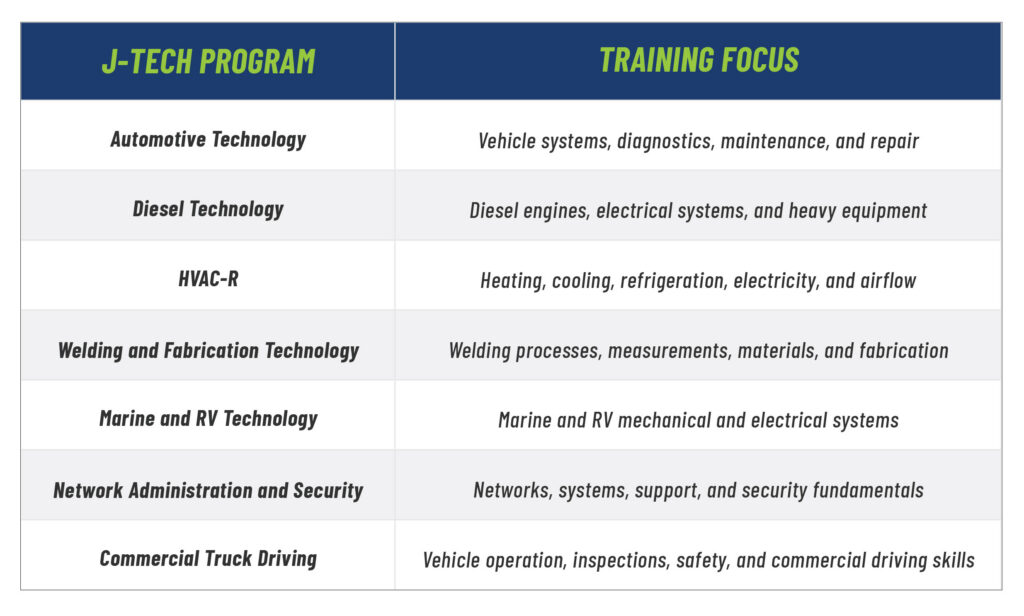
Program length, schedules, curriculum, credentials, and admissions requirements vary. Students should review the individual J-Tech program pages and speak with Admissions for current information.
Employers Help Shape Career Training
Employers understand the tools, workplace expectations, and technical skills that matter in their fields.
J-Tech works with industry representatives through Program Advisory Committees. Members provide input related to programs, resources, equipment, and training materials. J-Tech also offers on-campus recruiting opportunities that connect employers with students and graduates.
These relationships can help students understand what employers expect. Technical ability matters, but so do reliability, safety awareness, problem-solving, and a willingness to learn.
Career Services Support the Transition to Work
Completing training is one step. Students must also prepare to search for opportunities, explain their skills, and interview with employers.
J-Tech Career Services provides career guidance and job placement assistance. Available opportunities are also shared with graduates as well as scholarships and financial aid for those who qualify.
Students still play an active role in the process. Attendance, effort, professionalism, interview preparation, and follow-through can affect a graduate’s job search.
Skilled Trades Can Be a Path After High School
A traditional four-year college is not the only education option after high school. Some students want a learning environment focused on practical skills and a defined occupational field.
Trade school may appeal to students who enjoy tools, technology, machines, systems, or equipment. It may also be worth exploring for students who become more engaged when a lesson connects directly to a real task.
That does not make trade school an easy option. Technical programs require attendance, study, safety awareness, problem-solving, and consistent practice.
The right path depends on the student. Families should consider interests, learning style, goals, program requirements, cost, and available financial aid.
What to Look for in a Jacksonville Trade School
Students should compare more than program names. A campus visit can help families understand how training is delivered and whether the environment feels like a good fit.
Ask questions such as:
- What credential does the program award?
- How much training takes place in shops or labs?
- What tools and equipment do students use?
- How long does the program take?
- What schedules are available?
- What career services are provided?
- Do employers recruit on campus?
- What financial aid and scholarships are available for those who qualify?
A tour can make it easier to picture the day-to-day experience.
Why Skilled Trades in Jacksonville Matter for the Future
Why skilled trades in Jacksonville matter is about more than filling current openings. It is about developing people who can maintain the vehicles, equipment, technology, and systems that support a growing region.
The News4JAX visit brought attention to that need while showing what hands-on education looks like at J-Tech. It also gave students and families another reason to explore careers that may receive less attention than traditional college pathways.
Jacksonville needs skilled workers. Students need clear information about available training paths. Connecting those needs can create more options for individuals while supporting employers and the larger Northeast Florida community.
Explore Hands-On Training at J-Tech
J-Tech offers career training in Automotive Technology, Diesel Technology, HVAC-R, Welding and Fabrication Technology, Marine and RV Technology, Network Administration and Security, and Commercial Truck Driving.
Explore J-Tech’s programs, schedule a campus tour, or request information to learn about current program details, admissions requirements, schedules, and financial aid and scholarships available to those who qualify.
Frequently Asked Questions
Why are skilled trades important in Jacksonville?
Skilled trades support transportation, heating and cooling, logistics, vehicle repair, technology, manufacturing, and marine activity throughout Northeast Florida. Training new workers can help employers respond to growth and changing workforce needs.
What programs does J-Tech offer?
J-Tech offers Automotive Technology, Diesel Technology, HVAC-R, Welding and Fabrication Technology, Marine and RV Technology, Network Administration and Security, and Commercial Truck Driving at its Jacksonville campus.
Does J-Tech provide hands-on training?
Yes. J-Tech combines classroom instruction with practical training in program-specific shops and training environments. Activities and equipment vary by program.
Does J-Tech guarantee graduates a job?
No. Employment cannot be guaranteed. J-Tech provides career guidance, employer connections, and job placement assistance to help students and graduates prepare for the workforce.