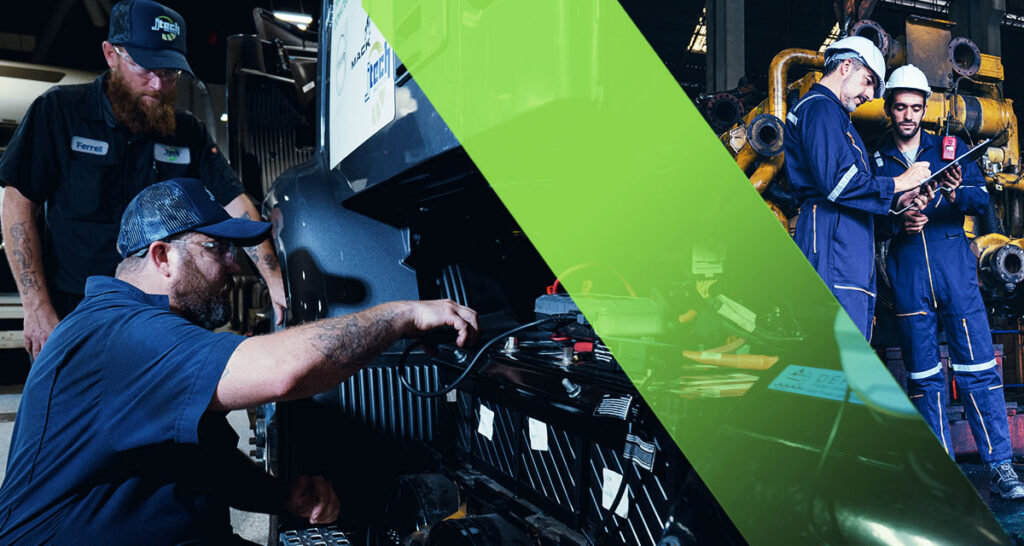
Diesel school vs. apprenticeship comes down to how you want to learn diesel technology. Diesel school provides structured classroom instruction and hands-on training across multiple vehicle systems. An apprenticeship combines paid employment, supervised work, and related technical instruction. Both can prepare you for a diesel technician career, but the right choice depends on your experience, finances, learning preferences, and available opportunities.
If you enjoy working with engines, trucks, and mechanical equipment, understanding these training paths is an important first step.
What Is Diesel Technology School?
When comparing diesel school vs. apprenticeship, let’s explore the school pathway first. Diesel technology school is a career-focused education program that teaches students how to inspect, diagnose, maintain, and repair diesel-powered vehicles and equipment.
Training typically combines classroom instruction with practical exercises involving engines, mechanical components, electrical systems, and diagnostic equipment.
Depending on the program, students may study:
- Diesel engine operation and repair
- Fuel injection and emissions systems
- Electrical and electronic systems
- Brakes, steering, and suspension
- Transmissions and drivetrains
- Preventive maintenance
- Computerized diagnostic procedures
The goal is to develop a foundation across several systems rather than learning only the repairs encountered at one workplace.
According to the U.S. Bureau of Labor Statistics, some employers prefer diesel technician candidates who have completed postsecondary training.
What Is a Diesel Apprenticeship?
A diesel apprenticeship allows individuals to learn technical skills while working under experienced technicians.
Apprentices may begin with basic maintenance and inspections before progressing to more complex repairs as their abilities develop.
A formal Registered Apprenticeship combines paid employment with structured on-the-job learning and related classroom instruction.
These programs also include mentorship, progressive wages, and a recognized credential upon successful completion.
However, not every entry-level diesel shop position is a Registered Apprenticeship.
Some employers offer informal on-the-job training or trainee positions without a formal apprenticeship structure.
Understanding that distinction is important when evaluating opportunities.
Diesel School vs. Apprenticeship: Key Differences
Both pathways provide practical experience, but the training environments differ.
| Category | Diesel School | Diesel Apprenticeship |
| Training environment | Classrooms and technical labs | Workplace and related instruction |
| Hands-on experience | Supervised practical exercises | Supervised work on employer equipment |
| Compensation | Students generally pay tuition | Registered apprentices earn wages |
| Curriculum | Established program covering multiple systems | Structured around occupation and sponsor |
| Training timeline | Depends on the school and program | Depends on apprenticeship requirements |
| Equipment exposure | Equipment available through the school | Equipment serviced by the employer |
| Credentials | Certificate or degree, depending on program | Recognized apprenticeship credential |
| Entry process | School admissions | Employer or sponsor application |
Neither option guarantees employment or advancement.
A useful comparison should consider the actual school curriculum and the specific apprenticeship opportunity.
Why Choose a Diesel School?
Diesel school can be especially valuable for someone entering the field without previous mechanical experience.
Build a Broad Technical Foundation
Diesel technicians need to understand how different vehicle systems interact.
An engine performance problem might involve fuel delivery, electrical components, sensors, or emissions equipment.
A structured program introduces these systems through an organized curriculum.
Students can develop foundational knowledge before moving into more complicated diagnostic procedures.
Practice in a Training Environment
Technical labs provide opportunities to work with tools, components, and diagnostic equipment under instructor supervision.
Students can practice procedures, review mistakes, and develop safe working habits.
This can help beginners become more comfortable with equipment before entering a professional repair shop.
Learn Beyond One Employer’s Equipment
A diesel technician may eventually work with trucks, buses, or other diesel-powered equipment.
School-based training can introduce multiple systems and repair procedures rather than focusing entirely on one employer’s fleet.
The specific equipment and systems covered will depend on the program.
Prepare for Entry-Level Employment
Diesel school is designed to help students build technical skills for employment.
The Bureau of Labor Statistics notes that diesel technicians entering without postsecondary education typically receive extensive on-the-job training.
Formal education does not eliminate the need for workplace experience, but it can help students establish a foundation before beginning their careers.
Why Choose a Diesel Apprenticeship?
Apprenticeships offer advantages, particularly for people who want to earn money while developing their skills.
Earn While You Learn
Registered Apprenticeships provide paid employment from the beginning.
Participants gain experience while receiving wages, which may be important for people who need immediate income.
Learn From Experienced Technicians
Apprentices work alongside professionals who understand daily repair shop operations.
This provides exposure to actual service procedures, workplace expectations, and customer equipment.
Develop Employer-Specific Skills
Working for a particular fleet, dealership, or repair facility can help apprentices become familiar with its vehicles and service procedures.
This can be beneficial when someone already knows the type of diesel work they want to pursue.
However, apprenticeship openings depend on participating employers and program sponsors.
Applicants may need to meet specific qualifications or compete for available positions.
Which Path Takes Longer?
Training length is an important factor when comparing diesel school vs. apprenticeship.
Diesel school programs vary in duration. Some offer shorter certificates, while others provide more comprehensive associate degree programs.
J-Tech’s Diesel Technology program can be completed in as little as 21 months.
Formal apprenticeships have their own required training periods, which vary by occupation and sponsor.
It is important to distinguish completing initial education from becoming a fully experienced technician.
A diesel school graduate may still need substantial workplace experience to develop advanced diagnostic and repair skills.
Likewise, an apprentice may begin earning wages immediately but continue training for an extended period.
Compare the actual program requirements rather than assuming one option is always faster.
What Skills Do Diesel Technicians Need?
Modern diesel technicians need more than basic mechanical knowledge.
They work with systems that combine mechanical components, electronics, and computer-controlled technology.
Engine Diagnostics
Technicians must understand diesel combustion, fuel delivery, and engine performance.
Diagnosing a problem often requires interpreting symptoms and testing several possible causes.
Electrical Systems
Modern trucks contain sensors, wiring, electronic control modules, and other electrical components.
Technicians use diagnostic tools to identify faults and determine appropriate repairs.
Brakes and Drivetrains
Diesel technicians may inspect and repair braking systems, transmissions, axles, and related components.
Understanding how these systems operate together is important for safe vehicle maintenance.
Preventive Maintenance
Regular inspections help identify potential problems before they become more serious.
Technicians must follow maintenance schedules, inspect components, document findings, and recognize signs of wear.
Both diesel school and apprenticeships can develop these skills, although the training experience will differ.
Can Diesel School Lead to an Apprenticeship?
Yes, potentially.
Diesel school and apprenticeships are not necessarily competing pathways.
Some apprenticeship sponsors may recognize relevant previous education or training.
According to Apprenticeship.gov, prior classroom or work experience may count toward apprenticeship requirements, depending on the program.
However, completing diesel school does not automatically qualify someone for an apprenticeship or guarantee credit.
Students interested in combining both pathways should contact the apprenticeship sponsor to understand its requirements.
How J-Tech Teaches Diesel Technology
Jones Technical Institute (J-Tech) offers hands-on Diesel Technology training in Jacksonville, Florida.
The program focuses on diagnosing, troubleshooting, maintaining, and repairing light, medium, and heavy-duty trucks.
Students learn about diesel engines, electrical systems, drivetrains, brakes, suspension, steering, and other essential vehicle components.
J-Tech’s training facilities include a 26,000-square-foot diesel lab equipped with diagnostic tools and training equipment.
The program also offers:
- Instruction from experienced technical educators
- Preparation for relevant ASE certification testing
- Exposure to industry-relevant diagnostic equipment
- A professional tool set for graduates
- Career Services and employer networking opportunities
Students who successfully complete the program receive an Occupational Associate Degree in Diesel Technology.
The 21-month program provides structured technical training designed to prepare students for entry-level opportunities.
Employment and certification are not guaranteed.
What About Advanced Diesel Training?
Diesel technology continues to evolve, and some technicians pursue specialized training after completing their initial education.
J-Tech offers the Diesel Advanced Technology Education (D.A.T.E.) program in partnership with Volvo Trucks and Mack Trucks.
This advanced training opportunity focuses on manufacturer-specific technology and service procedures.
Eligible students must meet program requirements, and participation is not automatic.
For students interested in continued technical development, programs such as D.A.T.E. demonstrate how foundational diesel education can connect with more specialized training.
Choose Your Diesel Training Path
When evaluating diesel school vs. apprenticeship, consider more than how quickly you can begin working.
Think about the technical skills you want to develop, the learning environment you prefer, and the training opportunities available.
For someone who wants a structured introduction to diesel engines, electrical systems, and heavy-duty truck repair, diesel technology school may be a practical starting point.
J-Tech offers hands-on training designed to help students develop foundational technical knowledge before pursuing entry-level employment.
Explore the J-Tech Diesel Technology program to learn about the curriculum, training facilities, and admission requirements.
You can also schedule a campus tour to see the diesel lab and speak with Admissions about your next steps.
Frequently Asked Questions
Is diesel school better than an apprenticeship?
Neither is automatically better. Diesel school provides structured instruction across multiple vehicle systems, while apprenticeships combine paid employment with supervised training. Your choice should depend on your experience, finances, goals, and available opportunities.
Do diesel apprentices get paid?
Registered diesel apprenticeships provide paid employment. Wages and progression depend on the employer and program sponsor. Informal trainee positions may have different arrangements.
Can you become a diesel mechanic without school?
Yes. Some diesel technicians begin with a high school diploma and receive extensive on-the-job training. However, certain employers prefer candidates with postsecondary diesel education.
How long is diesel school at J-Tech?
J-Tech’s Diesel Technology program can be completed in approximately 21 months. Students receive classroom instruction and hands-on training involving light, medium, and heavy-duty truck systems.
Do diesel technicians need ASE certification?
ASE certification is not universally required for every diesel technician position. However, some employers prefer or require industry credentials. Certification generally involves passing examinations and meeting relevant experience requirements.
Can you work while attending diesel school?
Possibly. Students may be able to combine employment with their class schedules, depending on program requirements and individual circumstances. Contact J-Tech Admissions for current scheduling information.