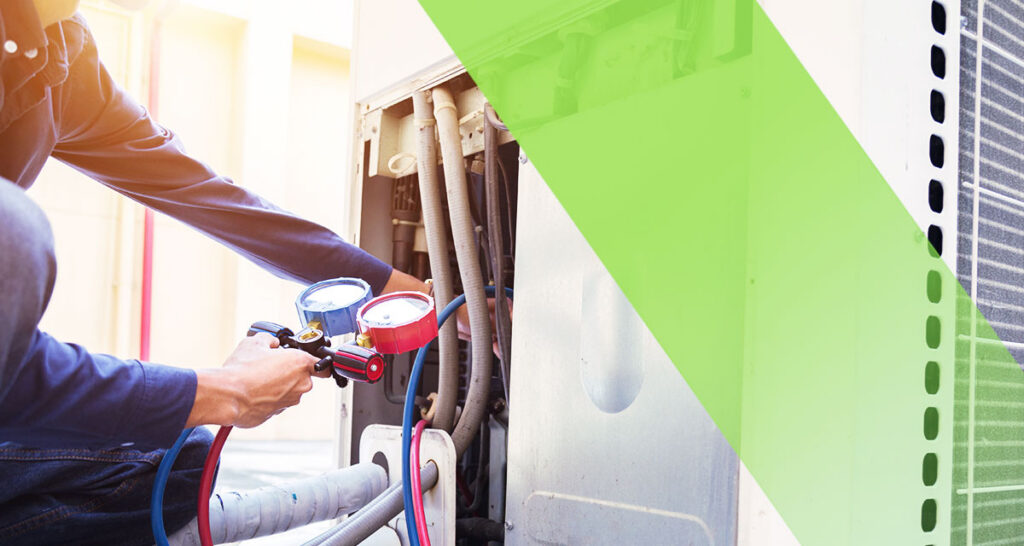
Is HVAC a good career? For many individuals, the answer is yes. HVAC technicians work in an essential industry that combines hands-on problem solving, technology, and customer service. Homes, schools, hospitals, offices, and businesses all rely on heating, ventilation, air conditioning, and refrigeration systems, creating ongoing demand for skilled professionals who can install, maintain, and repair them.
As high school graduation approaches, many students begin comparing career paths. Some plan to attend a four-year university, while others are looking for a faster route into the workforce. If you enjoy working with your hands, solving problems, and learning technical skills, HVAC is a career worth exploring.
What Does an HVAC Technician Do?
HVAC stands for Heating, Ventilation, Air Conditioning, and Refrigeration.
HVAC technicians help keep buildings comfortable, safe, and energy efficient by installing, maintaining, troubleshooting, and repairing climate control systems.
Depending on the job, an HVAC technician may:
- Install new heating and cooling systems
- Diagnose equipment problems
- Repair electrical components
- Test refrigerant pressures
- Perform routine maintenance
- Improve indoor air quality
- Recommend energy-efficient upgrades
Some technicians specialize in residential work, while others focus on commercial buildings, industrial facilities, schools, hospitals, or refrigeration systems.
Why More Students Are Considering HVAC
Many students are looking for careers that combine practical skills with long-term opportunity.
HVAC offers several characteristics that appeal to today’s graduates:
- Hands-on work instead of sitting behind a desk all day
- Technology-driven equipment and diagnostics
- Opportunities to solve different problems every day
- Skills that can be applied in residential and commercial settings
- Training that can often be completed faster than a traditional four-year degree
For students who enjoy figuring out how things work, HVAC can be an engaging and rewarding field.
Why HVAC Continues to Be in Demand
One reason many people ask, “Is HVAC a good career?”, is because they want confidence that the industry will continue to need skilled workers.
According to the U.S. Bureau of Labor Statistics, employment for heating, air conditioning, and refrigeration mechanics and installers is projected to grow faster than the average for all occupations, creating thousands of openings each year.
Several factors contribute to that demand:
- Population growth
- New residential construction
- Commercial development
- Replacement of aging HVAC systems
- Increased focus on energy efficiency
- Retirement of experienced technicians
For states like Florida, where air conditioning is a necessity for much of the year, HVAC systems are part of everyday life for homeowners, businesses, healthcare facilities, schools, restaurants, and countless other organizations.
HVAC Is More Than Air Conditioners
Many people picture an HVAC technician fixing a broken air conditioner on a hot summer day.
The profession is much broader than that.
Modern HVAC technicians may work with:
- Heating systems
- Ventilation equipment
- Commercial refrigeration
- Heat pumps
- Smart thermostats
- Building automation systems
- Indoor air quality equipment
- Energy-efficient technologies
As buildings become more connected and efficient, technicians continue to work with increasingly advanced equipment.
The U.S. Department of Energy highlights the importance of efficient heating and cooling systems in reducing energy use and improving building performance.
Is HVAC a Good Career for Hands-On Learners?
Not every student enjoys spending four years in a traditional classroom.
Some people learn best by:
- Working with tools
- Solving real problems
- Diagnosing equipment
- Learning through experience
- Seeing immediate results
HVAC combines mechanical systems with technology, making it an excellent option for students who enjoy practical learning.
Every day presents new challenges, and technicians often encounter different equipment and situations that require critical thinking rather than repetitive tasks.
How AI Is Changing HVAC
Artificial intelligence is becoming part of many industries, including HVAC.
Smart systems can monitor performance, identify potential issues, and improve energy efficiency. However, technology still depends on skilled professionals to install equipment, perform maintenance, diagnose complex problems, and complete repairs safely.
HVAC technicians increasingly use technology as a tool rather than compete against it.
For students interested in combining hands-on work with modern technology, HVAC continues to evolve alongside advances in automation and smart buildings.
How Long Does HVAC Training Take?
Training timelines vary depending on the educational path you choose.
At career-training schools like Jones Technical Institute (J-Tech), the HVAC-R Technology program can be completed in as soon as 21 months.
Students receive hands-on instruction covering:
- Heating systems
- Air conditioning systems
- Refrigeration
- Electrical fundamentals
- Diagnostics
- Preventive maintenance
Students also generally attend classes only a few days each week, allowing many to balance school with part-time employment while completing their training.
Learn more about the HVAC-R Technology program here.
Financial Aid and Scholarships May Be Available
Many students assume technical education is paid entirely out of pocket.
In reality, accredited institutions may offer financial aid opportunities for eligible students.
J-Tech students may qualify for:
- Federal financial aid through FAFSA
- Scholarships for qualifying students
- Grants and student loans for those who qualify
Additional information is available at:
Financial Aid
https://www.jtech.org/admissions-requirements/financial-aid/
Scholarships
https://www.jtech.org/admissions-requirements/scholarships/
Federal Student Aid
https://studentaid.gov
J-Tech’s financial aid team works one-on-one with students and families to explain available options and create a personalized education plan.
Job Assistance and Industry Connections
Education is only one step toward starting a career.
J-Tech also offers job assistance and maintains relationships with employers across the industries it serves.
Students have opportunities to connect with businesses and industry professionals while preparing for employment, helping them better understand expectations and career opportunities in the HVAC field.
Explore HVAC Training at J-Tech
So, is HVAC a good career? For many students, the answer is yes.
It offers a combination of hands-on learning, technology, problem solving, and opportunities to develop practical skills that are needed in homes and businesses every day.
If you’re interested in learning more about HVAC-R Technology, financial aid options, or the admissions process, visit J-Tech and explore whether this career path aligns with your goals and interests.
Frequently Asked Questions
Is HVAC a good career after high school?
For students who enjoy hands-on work, problem solving, and technology, HVAC can provide a practical path into an essential industry without requiring a traditional four-year degree.
Is HVAC in demand in Florida?
Florida’s climate creates consistent demand for heating, ventilation, air conditioning, and refrigeration services across residential, commercial, healthcare, education, and hospitality settings.
Do HVAC technicians work with technology?
Yes. Modern HVAC systems often include smart controls, sensors, building automation systems, and advanced diagnostic equipment.
How long does HVAC training take?
At J-Tech, the HVAC-R Technology program can be completed in as soon as 21 months.
Can students work while attending J-Tech?
Because students generally attend classes only a few days each week, many choose to work part-time while completing their training.
Is financial aid available for HVAC training?
Eligible students attending accredited institutions may qualify for federal financial aid, scholarships, grants, and other funding opportunities.