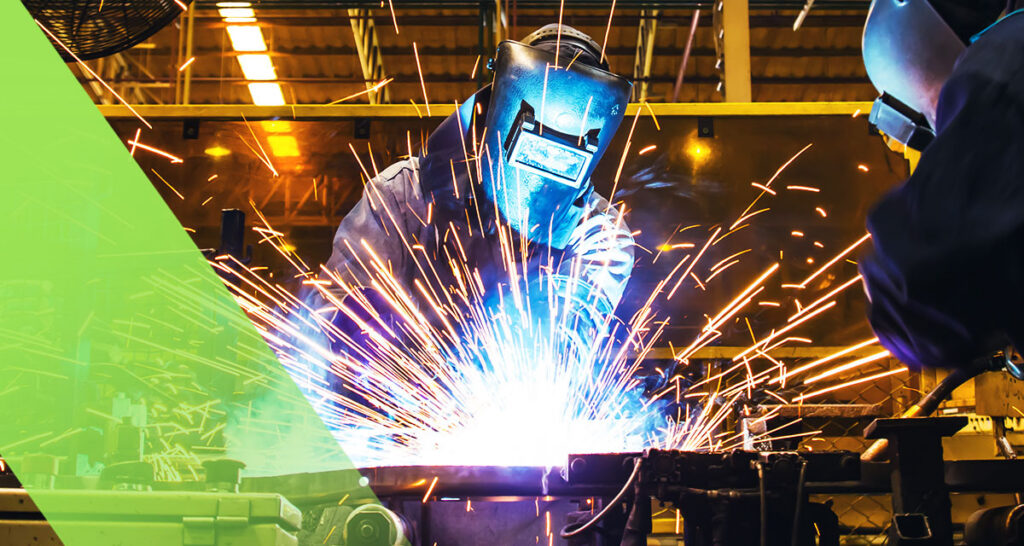
What does a welder do? Welders work in industries such as construction, manufacturing, transportation, marine, and infrastructure, helping build everything from bridges and buildings to trailers and custom metal projects. Many welders also perform fabrication work, making the profession a combination of technical skill, precision, and hands-on problem solving.
If you’re exploring career options after high school, you’ve probably heard about welding. You may know someone who welds or have seen welders working on construction sites, but that’s only part of the story. Modern welding is a skilled trade that combines craftsmanship, technology, and problem solving, creating opportunities in a wide range of industries.
What Does a Welder Do Every Day?
The answer depends on where they work, but most welders spend their day cutting, joining, repairing, or fabricating metal components.
Common responsibilities include:
- Reading blueprints and technical drawings
- Measuring and preparing materials
- Cutting and shaping metal
- Operating welding equipment
- Inspecting completed welds
- Following safety procedures
- Repairing or reinforcing existing structures
Some projects take only a few minutes, while others may require careful planning and precision over several days or weeks.
No two days are exactly alike, which is one reason many welders enjoy the profession.
Welding Is More Than Construction
Many people picture a welder standing on a construction site wearing a helmet and sparks flying everywhere.
While construction is certainly one career path, welding skills are used in many different industries.
Welders may work in:
- Manufacturing facilities
- Automotive production and repair
- Marine and boating industries
- Heavy equipment companies
- Transportation and logistics
- Aerospace manufacturing
- Structural steel fabrication
- Custom metal shops
This variety allows welders to pursue careers that match their interests, whether they enjoy working in a shop environment, traveling to job sites, or building specialized products.
What Is the Difference Between Welding and Fabrication?
People often use the terms interchangeably, but they are not exactly the same.
Fabrication is the process of creating a finished metal product from raw materials. It often includes:
- Measuring
- Cutting
- Bending
- Shaping
- Assembling
Welding is one of the techniques used to permanently join those metal components together.
Because these skills work hand in hand, many employers value technicians who understand both welding and fabrication.
What Skills Do Welders Need?
Successful welders develop a combination of technical knowledge and practical skills.
Some of the most important include:
Attention to Detail
Small measurements and precise welds can make a significant difference in the quality of a finished project.
Mechanical Aptitude
Understanding how parts fit together helps welders produce strong and accurate work.
Problem Solving
Every project presents unique challenges, requiring welders to think critically and adjust their approach.
Hand-Eye Coordination
Controlling welding equipment while maintaining accuracy takes focus and practice.
Communication and Teamwork
Many welding projects involve working alongside fabricators, engineers, mechanics, and other skilled professionals.
These are skills that develop through training and experience rather than something students are expected to master on day one.
Do Welders Use Technology?
Absolutely…modern welding combines traditional craftsmanship with advanced technology.
Today’s welders may work with:
- Computer-generated blueprints
- Precision measuring equipment
- CNC fabrication tools
- Robotic welding systems
- Automated cutting equipment
- Digital inspection devices
Technology has changed how many projects are completed, but skilled welders continue to play an essential role by setting up equipment, ensuring quality, solving problems, and adapting to situations that automation cannot easily handle.
Is Welding Still in Demand?
One reason students ask, “What does a welder do?” is because they are also wondering whether welding is a smart career choice.
According to the U.S. Bureau of Labor Statistics, welders, cutters, solderers, and brazers continue to play an important role across manufacturing, construction, and other industries.
At the same time, organizations such as the American Welding Society have highlighted the ongoing need for skilled welding professionals as experienced workers retire and industries continue investing in infrastructure and manufacturing.
For students looking for a hands-on technical career, welding remains an important and versatile profession.
Is Welding Just Working With Metal?
Not anymore.
Today’s welders often combine:
- Blueprint reading
- Mathematics
- Technology
- Quality control
- Precision measurements
- Equipment setup
- Safety planning
Every project requires attention to detail and the ability to solve problems efficiently.
For students who enjoy building things and seeing tangible results from their work, welding offers an opportunity to create products and structures that people use every day.
How Long Does Welding Training Take?
Training requirements vary depending on the employer and career path.
At career-training institutions like Jones Technical Institute (J-Tech), the Welding & Fabrication Technology program can be completed in as soon as 21 months.
Students receive hands-on instruction covering:
- Welding techniques
- Metal fabrication
- Blueprint reading
- Equipment operation
- Shop safety
- Industry practices
Students generally attend classes only a few days each week, allowing many to balance school with part-time employment while building practical skills.
Learn more about the program here.
Financial Aid and Scholarships May Be Available
Many students are surprised to learn that accredited technical education programs may qualify for financial aid.
Eligible J-Tech students may have access to:
- Federal financial aid through FAFSA
- Scholarships for qualifying students
- Grants and student loans for those who qualify
Additional information is available at:
Financial Aid
https://www.jtech.org/admissions-requirements/financial-aid/
Scholarships
https://www.jtech.org/admissions-requirements/scholarships/
Federal Student Aid
https://studentaid.gov
J-Tech’s financial aid team works one-on-one with students and families to explain available options and create a personalized education plan.
Explore Welding & Fabrication at J-Tech
So, what does a welder do? They build, repair, fabricate, and solve problems using technical skills that support industries ranging from manufacturing and transportation to marine and infrastructure.
For students who enjoy working with their hands, learning practical skills, and seeing the results of their work every day, welding offers a career path that continues to evolve alongside technology and modern manufacturing.
If you’d like to learn more about Welding & Fabrication Technology, financial aid opportunities, or the admissions process, visit jtech.org.
Frequently Asked Questions
What does a welder do?
Welders join, repair, and fabricate metal components used in construction, manufacturing, transportation, marine industries, and many other fields.
What is the difference between welding and fabrication?
Fabrication involves measuring, cutting, shaping, and assembling metal, while welding is the process of permanently joining those components together.
Do welders only work in construction?
No. Welders also work in manufacturing, automotive, marine, heavy equipment, aerospace, transportation, and custom fabrication shops.
Do welders use technology?
Yes. Many welders work with computerized blueprints, precision measuring tools, automated equipment, and robotic welding systems.
How long does welding training take?
At J-Tech, the Welding & Fabrication Technology program can be completed in as soon as 21 months.
Can you use FAFSA for welding school?
Eligible students attending accredited institutions may qualify for federal financial aid by completing the FAFSA.